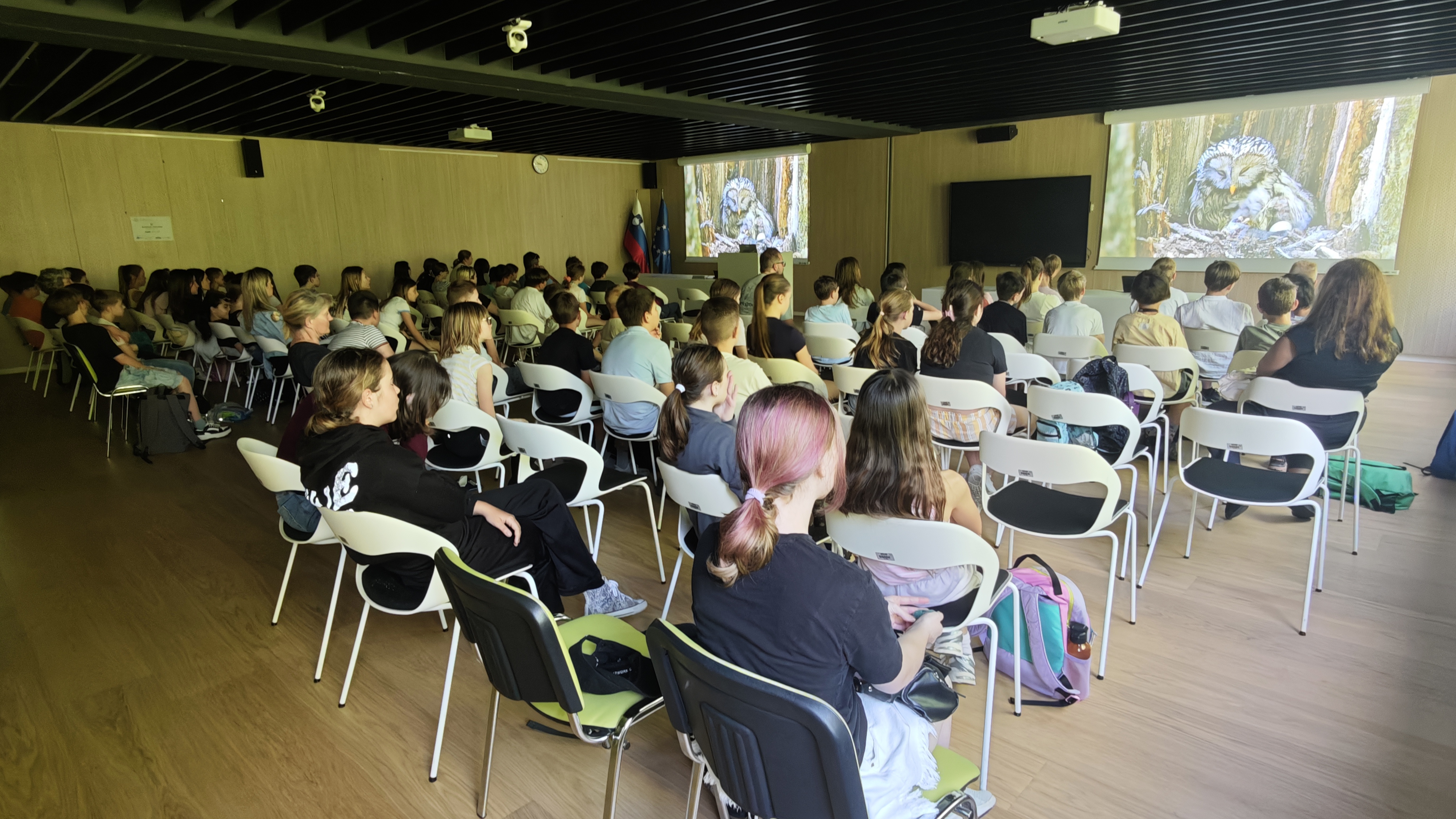
As part of the Researchers at School activities, the National Institute of Biology hosted a lively day of interactive workshops and a film screening. More than 1,400 visitors took part, most of them primary-school pupils; among them were pupils from the Institute for the Deaf and Hard of Hearing and residents of the Vipava–Ajdovščina Day Care Centre.
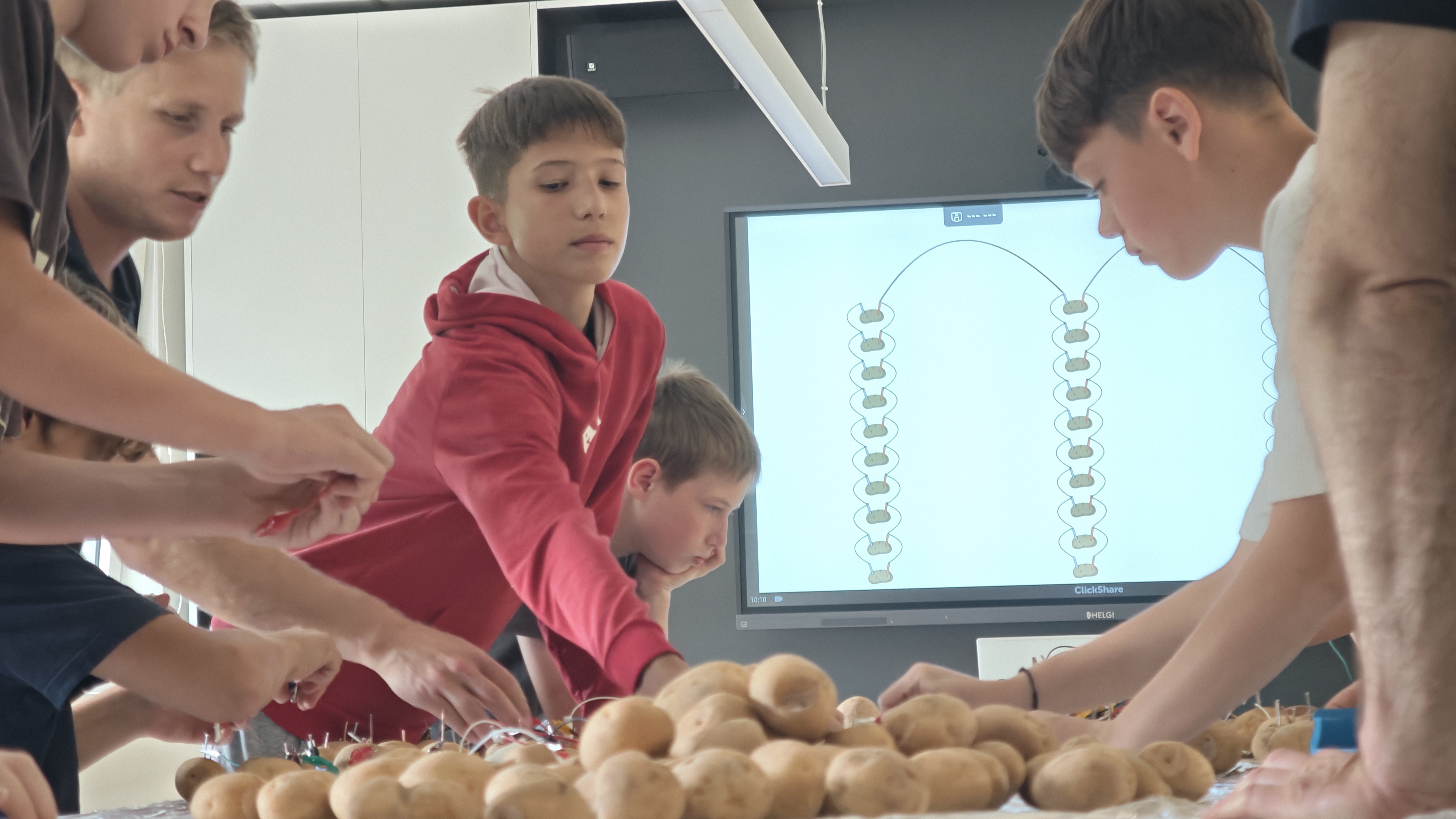
Potato + wire + potato + wire + … = a battery
There are many ways to generate electricity on Earth, but you probably did not know it can also be generated from plants. We learned some basic concepts about electricity and how they apply to plants, and together built giant plant batteries from potatoes.
The workshop was led by researchers from the Department of Biotechnology and Systems Biology of the National Institute of Biology (NIB).
Information written by alternating A, T, G and C
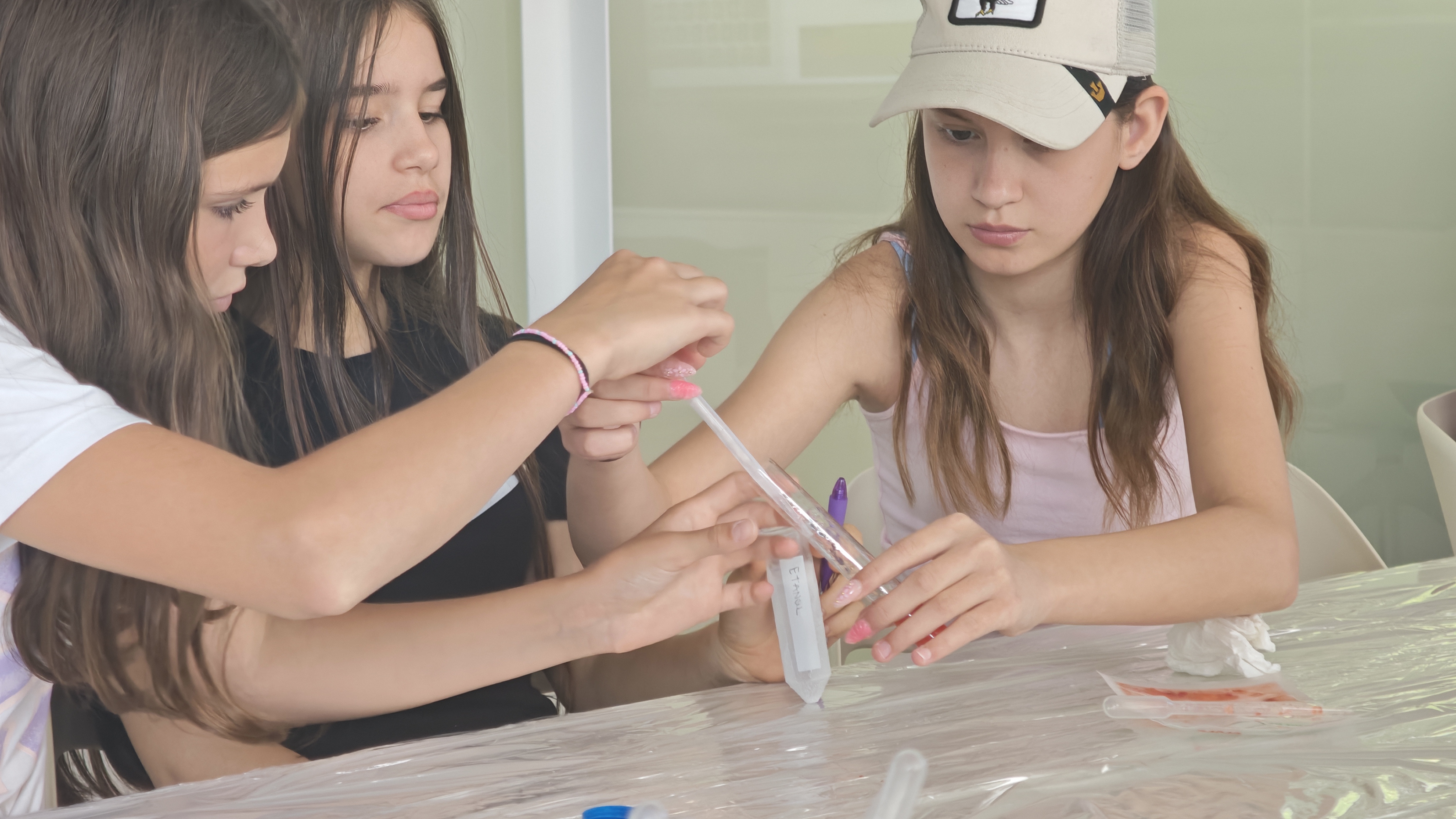
A plant cell contains many organelles (nucleus, chloroplasts, mitochondria …) with different tasks. The nucleus holds DNA, which carries hereditary information across generations, written as a sequence of four nucleotides: A, T, G and C. In the workshop we tried isolating plant DNA from the cell nucleus and measuring its amount, and looked at organelles under the microscope.
The workshop was led by researchers from the Department of Biotechnology and Systems Biology of the National Institute of Biology (NIB).
Rhythmic gene expression
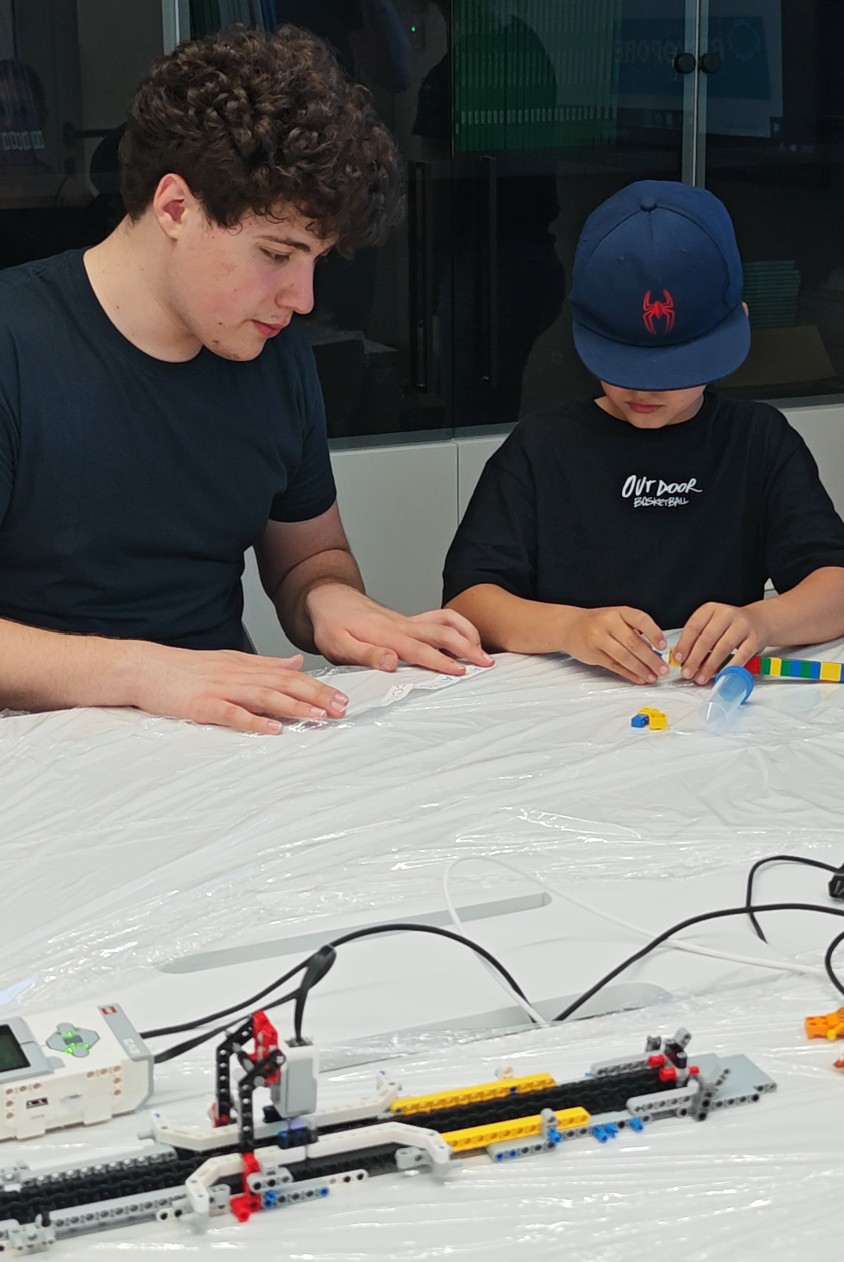
Many genes are expressed rhythmically through the day — some more by day, others at night. We measure how strongly a gene is expressed by reading how many RNA molecules for that gene are in the cell. In the workshop we explored how nucleic acids are read with a sequencer built from LEGO bricks: we assembled our own nucleic-acid sequence and identified which gene it belonged to.
The workshop was led by researchers from the Department of Biotechnology and Systems Biology of the National Institute of Biology (NIB).
An alga in your pocket
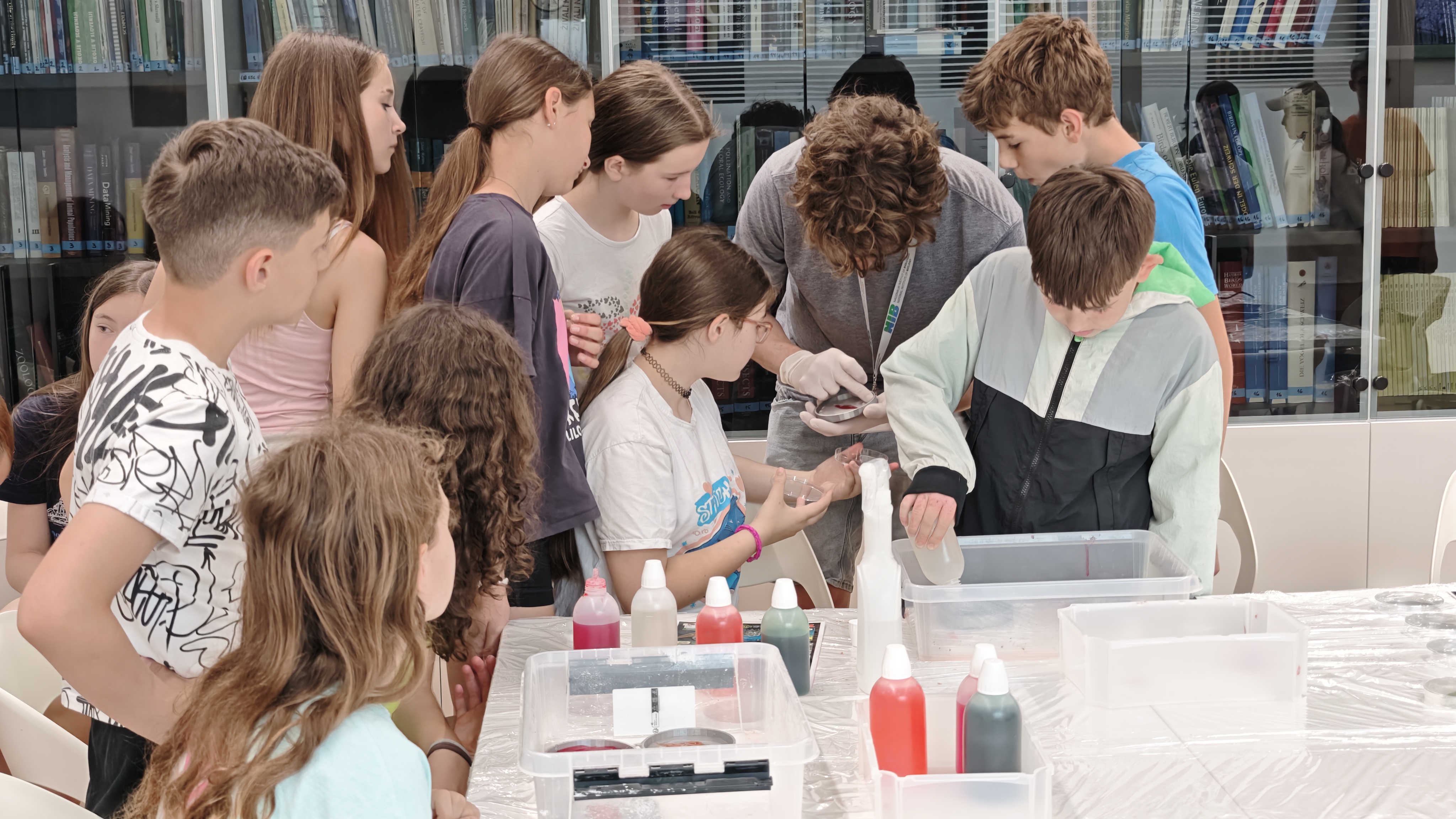
Plants release oxygen that living organisms use to breathe. Marine microalgae produce 50% of all the oxygen on Earth. We explored their shapes, roles and peculiarities and created our own unique microalga to take home in our pocket.
The workshop was led by researchers from the Marine Biology Station Piran (NIB) and the PiNA Cultural and Educational Association.
The life cycle of an owl
We all know owls hatch from eggs and later lay eggs of their own, but we rarely get to see how an owl raises its young, hunts, or defends itself. The award-winning film The Warrior Queen of the Night by acclaimed director Matej Vranič — produced with the National Institute of Biology and RTV Slovenia — follows the secret life of the Ural owl. NIB researchers, through fieldwork and scientific study, reveal the owl's secrets and contribute to its protection, showing how important owls are for the forest ecosystem.
The screening was presented by researchers of the National Institute of Biology (NIB).