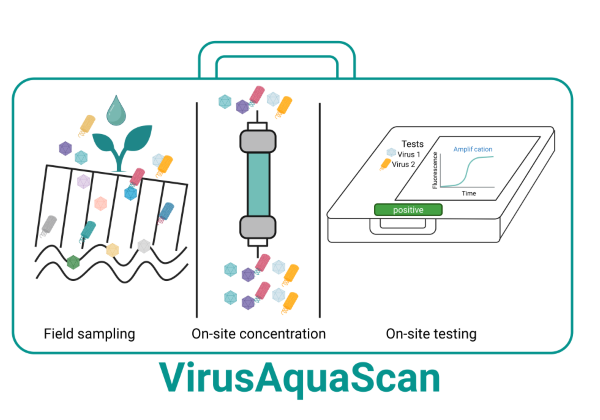
Water is an increasingly important component of modern agricultural production, but it can also contribute to the dissemination of plant viruses and other plant pathogens. The use of surface water, recycled water, and irrigation systems may facilitate the movement of viruses between agricultural environments, creating challenges for plant health management and sustainable crop production. Understanding and monitoring these risks is therefore becoming an important part of modern agricultural practice.
VirusAquaScan addresses this challenge through the development and validation of innovative tools for monitoring plant viruses in water used in agriculture. The project focuses on improving the ability to detect and assess virus presence in water samples, supporting efforts to reduce plant health risks and strengthen sustainable food production systems.
The project builds upon knowledge and experience gained through the previous ARIS-funded project TOBAMO (Discovery and water-linked epidemiology of emergent tobamoviruses infecting crops; project website). TOBAMO significantly advanced understanding of the occurrence, survival, and transmission of plant viruses in aquatic environments and highlighted the importance of efficient monitoring strategies for water used in crop production. The outcomes of TOBAMO identified the need for practical solutions that could support routine monitoring and future implementation in agricultural and diagnostic settings.
VirusAquaScan brings together the complementary expertise of the National Institute of Biology (NIB) and BIA d.o.o. Through collaboration between research and industry, the project aims to advance innovative solutions with the potential to support plant health management, environmental monitoring, and the translation of scientific knowledge into future practical applications.
The project contributes to the objectives of sustainable agriculture, improved plant health protection, and the development of innovative technologies that support resilient food production systems under changing environmental conditions.